PAINTINGS
AJANTA
CAVE PAINTINGS
the many-splendoured delights of Ajanta compiled by Subramanian Swaminathan
e-mail: sswami99@gmail.com
September 2007
Rock-cut Architecture
The
caves of Ajanta offer an instructive field for the study of the evolution
of rock-cut architecture. It is unique in the sense that it can be
viewed as an enterprise of a sculptor.
The cave architecture, at Ajanta
and elsewhere, betrays the strong influence of wooden construction.
The Team was probably drawn from
the profession of carpenters, with goldsmiths and ivory-carvers joining
hands with the sculptors.
The evolution of rock architecture
took place during two periods: the Hinayana period of the pre-Christian
era and the later Mahayana period.
During the first phase the sculptural
activity was limited.
Mahayana period (4th century onwards)
In the second phase sculptural compositions
filled the facade, the shrines etc. Side by side with the excavation
of new caves the existing Hinayana ones were suitably modified.
The caves of Ajanta are divided
into
Chaitya-s - Temples
Vihara-s - Monasteries
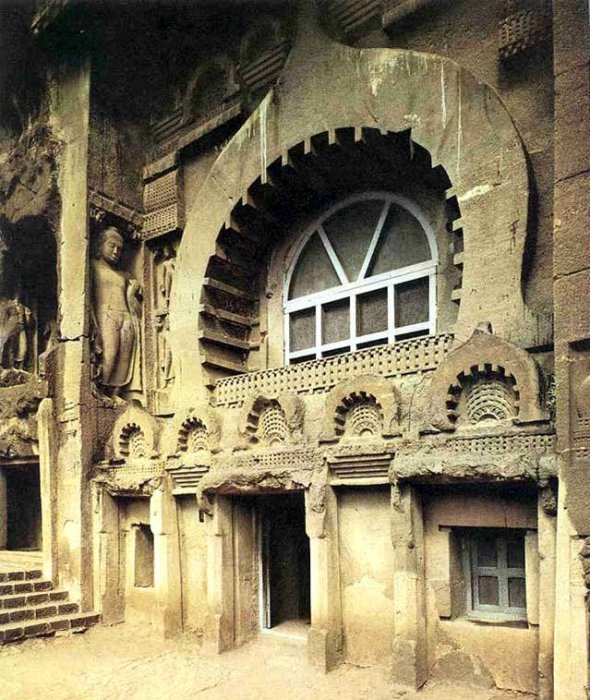
Mahayana period - Facade embellished
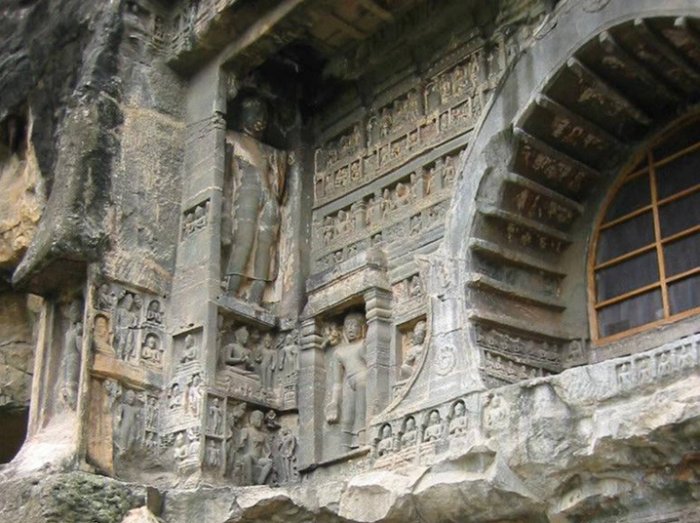
The entrance has a prominent arched window to light the interior. Relief sculptures added in Mahayana period
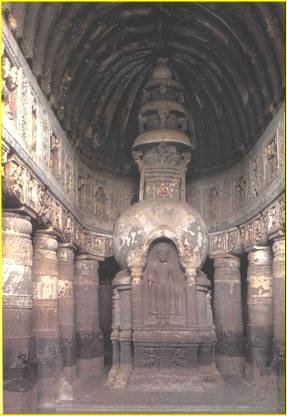
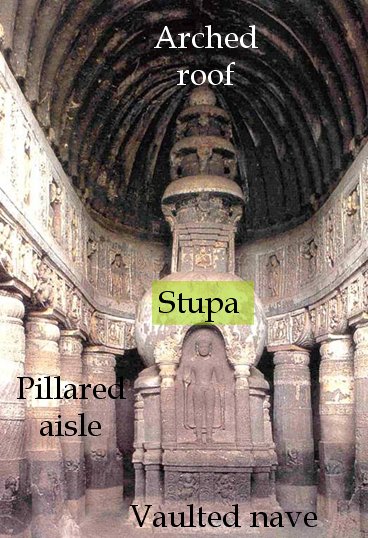
Chaitya - Interior, consists
of a long vaulted nave with a pillared aisle on either
side. The far end is
semicircular with a stupa at
its centre
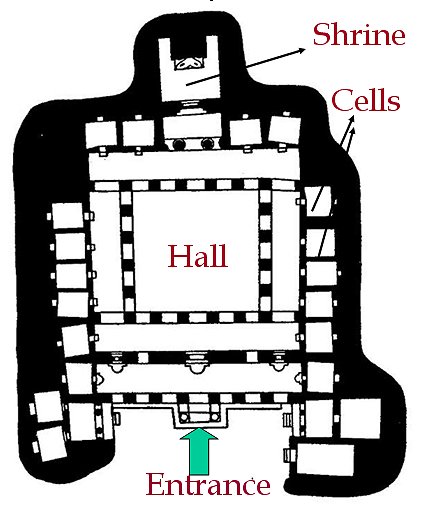
Vihara - Plan, It has a congregation
hall with cells for the monks on
the inner sides. Later a shrine was excavated
at the far end
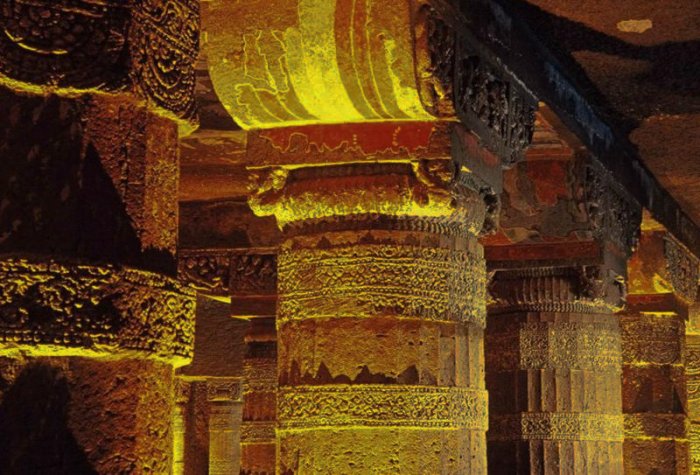
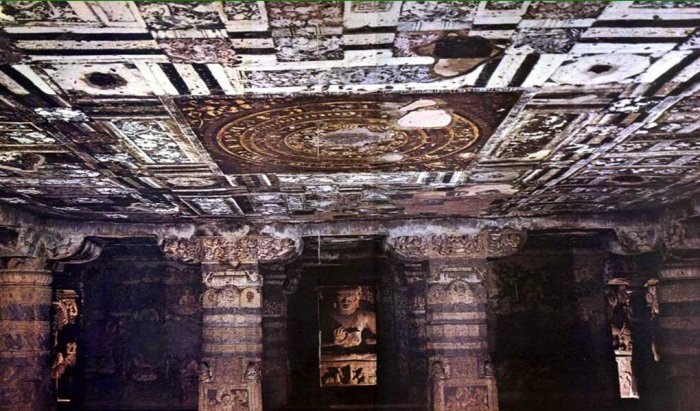
Vihara - Interior, A colossal
statue of the Buddha is seen in the sanctum.
On the left to the entrance is the famous painting of Padmapani
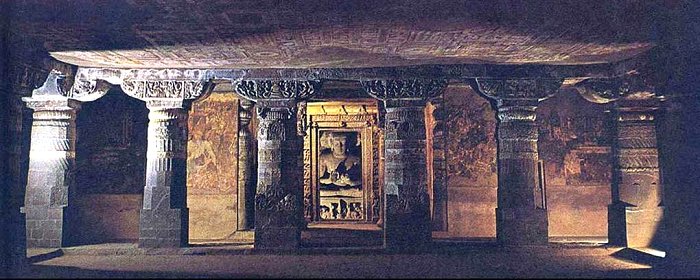
Vihara - Interior, Cave 2
Back
|