Traditional customs and practices of India
beauty treatment, kolams, poojas, rituals
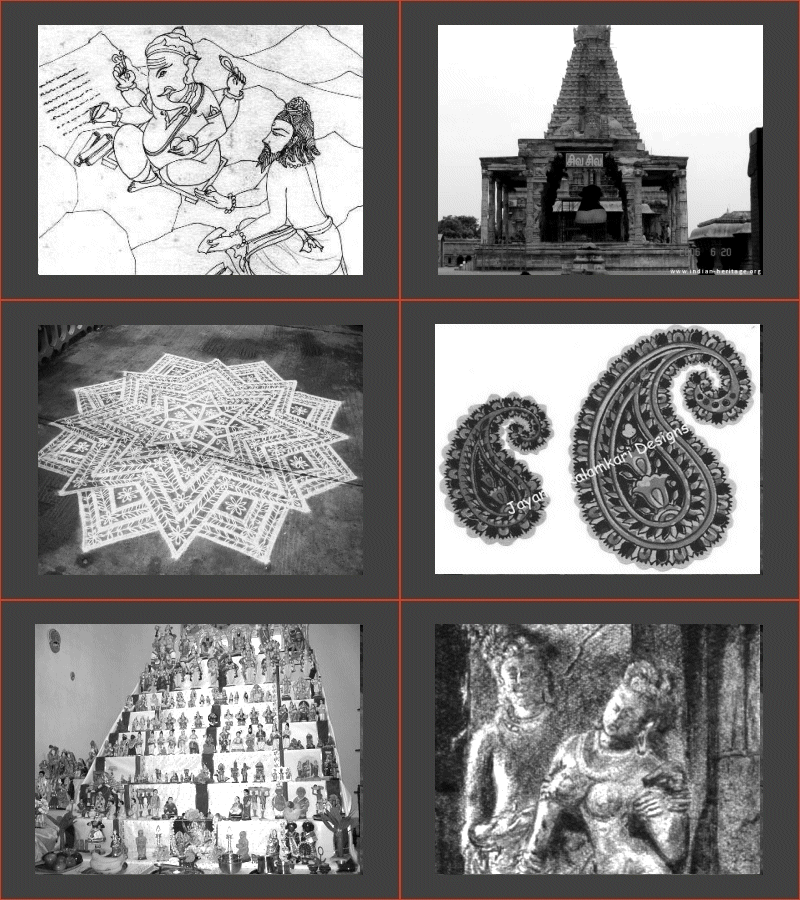
Kolam designs have been tradionally handed down to
the younger generation by the elders. Today,
several organisations and magazines conduct kolam
exhibitions and contests to revive the interest
in traditional habits and customs. There are
enthusiasts who create fresh new designs, but
kolams are basically redrawn by the public
following the designs taught by elders or printed
in books and magazines.
Kolams intro
Kolams display
Festivals
India being a land of diverse cultures & religions, countless festivals
are celebrated throughout the year. People of the same religion follow
different customs, based on the region in which they live.
The celebrations include prayers to the Gods, rituals, meeting with friends, sharing of sweets & gifts.
It is a Hindu belief that vrtams followed with sincerity, as stipulated,
will condition and discipline the body as well as the mind. Another
aspect of the Hindu religious festivals are the utsavams, which involve a
gathering, pomp and joyous activities.
There are festivals to the various Hindu Gods, Lords of the seasons.
Most Indian festivals follow the lunar calendar and not the solar
calendar.
Navarathiri
Golu displays
Queries,
common doubts on Indian customs & their explanation
Mark
on the forehead, application of mehendi
Traditional beauty
treatments have been handed down by word of mouth and
practice down the generations in India. Quite a few of the methods and
prctices followed by our elders had a very scientific and rational base
with a major usage of items that we use everyday in the kitchen, (like
milk, turmeric, curd, gram flours, etc..), leaves, flowers, fruits, seeds
& the bark and roots from plants (like hibiscus leaves & flowers,
henna leaves, baadaam, etc.) All of these items were widely used to beautify
but also to maintain and condition the body. Each of the beauty aids has
the required moderating effect. Today, the use of natural items in food,
beauty treatment, medicine is gathering momentum with a lot of herbal products
in the market.
In this section,
we are also planning to provide info on the traditional practices used
by Indians to decorate their homes, most of which have become part of everyday
life.
Quite a few
of the traditional methods and practices handed down to us had a very scientific
and rational base
- with items
that are in everyday use
- easy home
preparations
Related Links
Hindu Rituals and Routines - Why do we follow them?
vedanta.gr/...
Sri Sumukhi Rajasekharan Memorial
Foundation - "Mylapore Trio"
The Foundation contributes towards
enriching Indian art and culture in Mylapore (Chennai) through children,
youth & elders by inculcating in them Value based Culture, Tradition
& Heritage programmes.
srimylaporetrio.blogspot.com
|