Snippets of Information
Achievements / Recognition - Environmental Conservation
* 29 Jun 2026
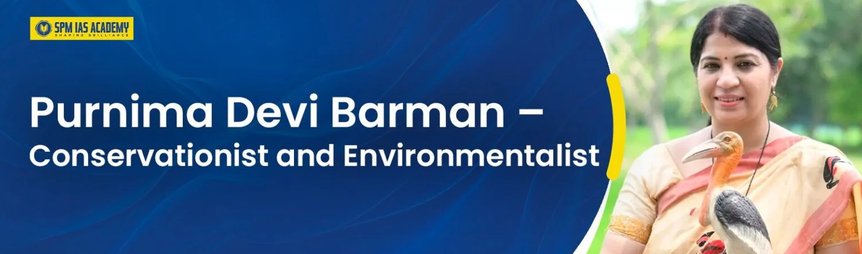
Image Source: spmiasacademy.com
Purnima
Devi Barman is a renowned Indian wildlife biologist and environmental
conservationist known for her remarkable work in protecting the greater
adjutant stork (Leptoptilos dubius), locally known as Hargila. Through
her grassroots conservation movement, she has mobilized thousands of
rural women in Assam to safeguard this critically endangered species.
In 2007, she witnessed the felling of a tree in a village that housed
multiple nests of greater adjutant storks.This led to the death of
several chicks and highlighted the challenges of habitat loss, negative
perceptions, and human-induced threats.She decided to dedicate her life
to saving the species, focusing on community engagement and behavioral
change.
Hargila Army is a pioneering community-based conservation model
led by Purnima Devi Barman to protect the endangered Greater Adjutant
Stork (Hargila) in Assam. This all-women grassroots movement engages
local communities, especially rural women, in habitat restoration,
awareness campaigns, and sustainable conservation efforts, transforming
the bird from a social stigma to a cultural icon.
Purnima Devi Barman’s conservation efforts have strengthened ecosystem
resilience and biodiversity by safeguarding the Greater Adjutant Stork
and its habitat. Her initiatives in wetland restoration, afforestation,
and waste management have improved ecological balance, supporting
various species and promoting sustainable coexistence between humans and
wildlife.
Tree Plantation Drive - Over 45,000 saplings planted
near Hargila breeding sites, restoring natural ecosystems.
Wetland Conservation - Protecting wetlands benefits over 200 species of birds, amphibians, and aquatic life.
Sustainable Waste Management - Educating locals to
reduce plastic pollution, preventing stork deaths from ingesting plastic
waste.
Pollution Control Measures - Worked with local panchayats to reduce pesticide use, benefiting biodiversity.
Source: Purnima Devi Barman - Conservationist and Environmentalist, spmiasacademy.com
|