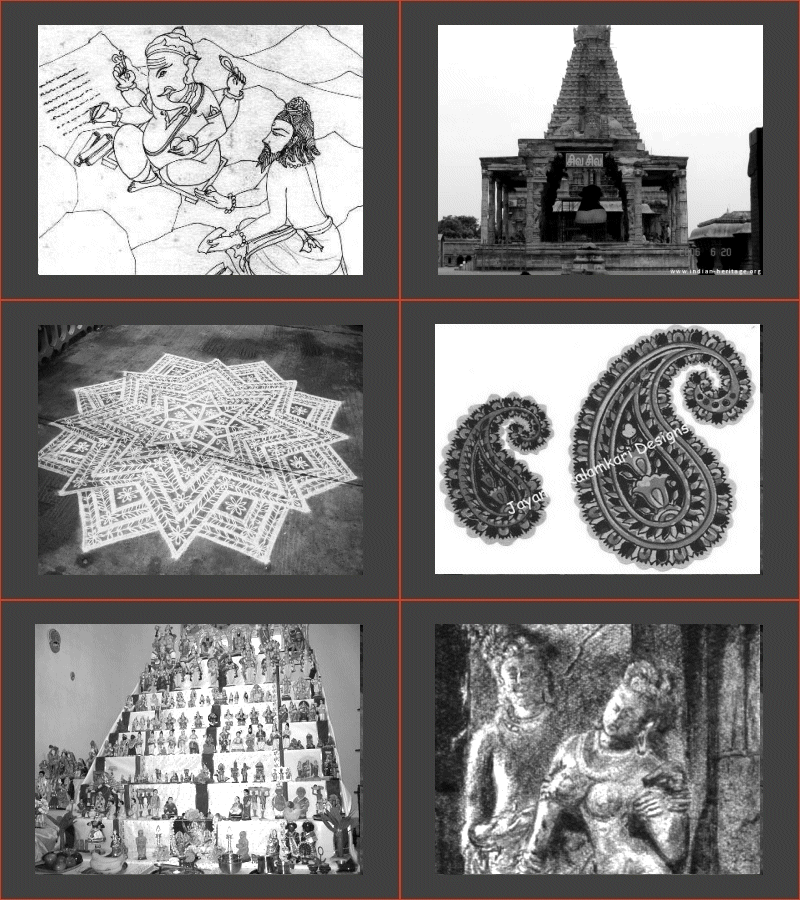
ARTS and CRAFTS
Svastika
Contact: +91 9429690080 / contact@svastika.in
Explore Svastika's collection - svastika.in
19 Feb 2026
How Svastika Preserves India’s Devotional Art Through God Idols
India’s devotional art is not merely a visual tradition; it is a living
cultural expression shaped by centuries of faith, philosophy, and
craftsmanship. From ancient temples carved in stone to sacred objects
placed in home shrines, devotional art has always played a central role
in how spirituality is experienced and preserved in Indian society.
Among these expressions, god idols stand out as powerful symbols that
merge artistic excellence with deep spiritual meaning.
In a time when mass production often overshadows traditional crafts,
preserving the authenticity and symbolism of devotional art has become
more important than ever. Brands like Svastika draw inspiration from
India’s artistic and spiritual heritage, ensuring that classical forms,
sacred symbolism, and traditional craftsmanship continue to thrive in
modern spaces.
Devotional Art as a Cultural Legacy
The roots of Indian devotional art can be traced back thousands of years
to ancient civilizations and temple traditions. Guided by texts such as
the Shilpa Shastra, artists followed precise rules regarding
proportions, expressions, postures, and materials to create idols that
were not only visually appealing but also spiritually aligned.
These sculptures were never intended to be decorative alone. Each
element, whether it was a deity’s gaze, hand gesture, or symbolic object
was designed to communicate deeper philosophical ideas. Over
generations, devotional art became a medium through which stories from
the Vedas, Puranas, and epics were passed down, keeping India’s
spiritual wisdom alive.
God idols: More Than Objects of Worship
In Indian tradition, God idols are seen as sacred representations
that help devotees form a personal connection with the divine. The
artistry involved reflects an understanding of both aesthetics and
spirituality. Calm facial expressions signify inner peace, balanced
proportions reflect cosmic harmony, and symbolic elements convey divine
attributes.
Beyond their spiritual role, idols also represent the skill and devotion
of the artisans who create them. Many traditional sculptors consider
their work a form of worship, following rituals and disciplines while
crafting each piece. This deep respect for the art form is what gives
devotional idols their timeless appeal.
Svastika’s Approach to Preserving Devotional Art
Svastika draws from this rich heritage by respecting traditional
iconography while adapting it thoughtfully for contemporary living
spaces. Rather than altering sacred forms, the focus remains on
maintaining authenticity, honouring classical designs, sacred symbols,
and culturally significant materials.
By collaborating with skilled artisans and emphasizing detailed
craftsmanship, Svastika ensures that each idol reflects India’s
devotional traditions. The result is art that resonates with spiritual
meaning while fitting seamlessly into modern homes.
The Significance of Silver and Gold in Devotional Art
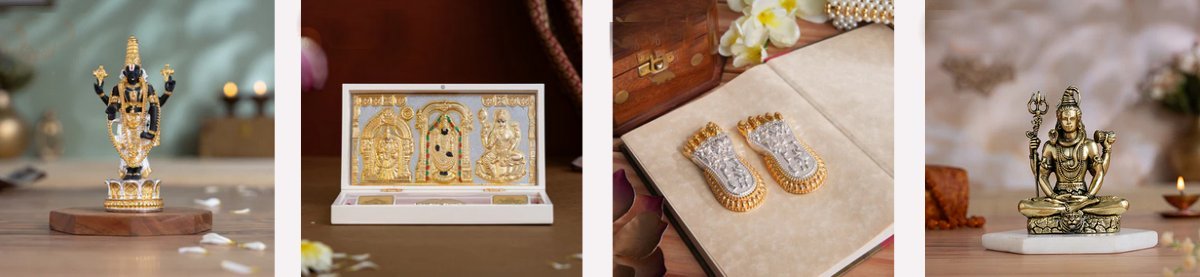
Metals like silver and gold have long held sacred importance in Indian
culture. Silver is associated with purity, calmness, and spiritual
clarity, while gold symbolizes divinity, prosperity, and auspiciousness.
Historically, temples and royal households often used these metals to
craft sacred objects, believing they enhanced the spiritual energy of
the space.
Silver- and gold-plated idols continue this tradition by preserving the
visual and symbolic richness of devotional art, while making it
accessible for everyday worship.
Living Examples of India’s Devotional Art
Certain idols beautifully demonstrate how traditional symbolism and
refined craftsmanship come together to preserve India’s sacred art
forms.
Lord Balaji Face Idol – Silver Plated
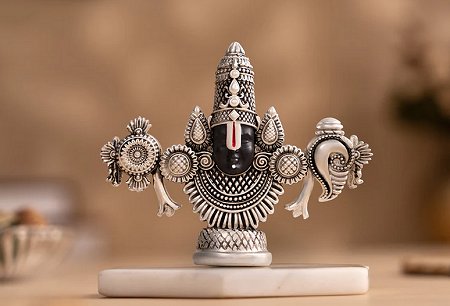
Lord Venkateswara, popularly known as Lord Balaji, holds a revered place
in Indian devotional tradition, especially in South India. Depictions
of His divine face emphasize serenity, compassion, and divine authority.
The silver plating traditionally associated with temple rituals
enhances the sacred presence of the idol, while the detailed facial
expression reflects classical sculptural techniques rooted in temple
art.
Ashtalakshmi Tortoise Idol – Silver Plated
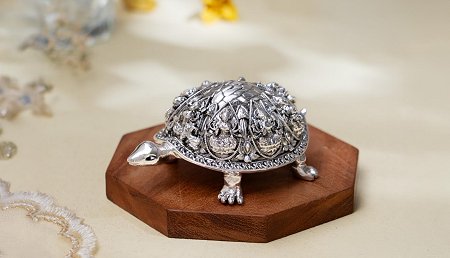
The Ashtalakshmi concept represents the eight forms of
Goddess Lakshmi, each symbolizing a different aspect of prosperity and
well-being. The tortoise, associated with Lord Vishnu’s Kurma avatar,
signifies stability and support. Together, they create a powerful symbol
deeply embedded in Indian mythology and Vastu traditions. The silver
finish reinforces the auspicious nature of the idol, making it a
meaningful representation of balance and abundance.
Silver Plated Kamdhenu Cow with Calf Idol
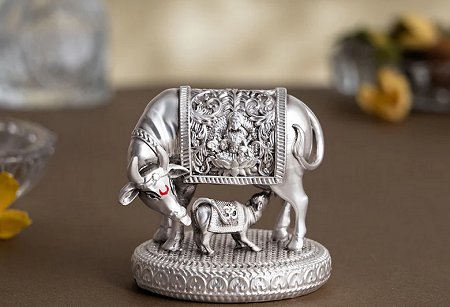
Kamdhenu, the divine cow mentioned in Vedic texts, symbolizes
nourishment, generosity, and abundance. The depiction of Kamdhenu with
her calf highlights themes of care, motherhood, and continuity - values
central to Indian culture. Crafted in silver plating, this idol reflects
purity and reverence, echoing the cow’s sacred status in Indian
spiritual life.
Lord Krishna’s Divine Hands with Flute – Gold Plated
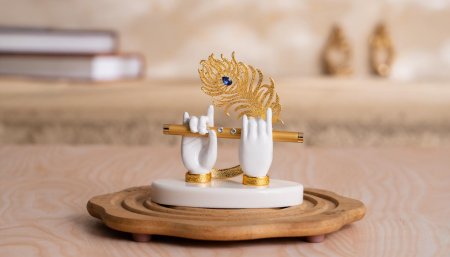
Lord Krishna’s flute is one of the most evocative symbols in Indian
devotional art, representing divine love, harmony, and the call of the
soul toward higher consciousness. Artistic depictions focusing solely on
Krishna’s hands and flute offer a subtle yet profound expression of
devotion. The gold plating adds a luminous quality, symbolizing the
divine joy and spiritual richness associated with Krishna worship.
Supporting Artisans and Craft Traditions
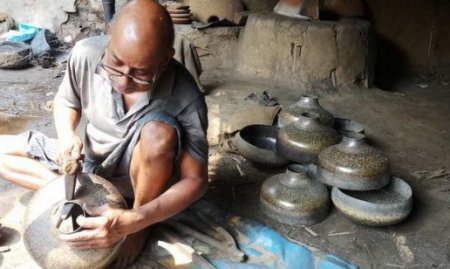
One of the most meaningful ways devotional art is preserved is through
continued support for artisan communities. Traditional sculptors and
metalworkers often rely on generations-old knowledge passed down within
families. By valuing handcrafted processes over mass production,
heritage-inspired brands help sustain these skills and livelihoods.
This support ensures that India’s devotional art remains a living tradition rather than a forgotten craft.
Devotional Art in Modern Indian Homes
As lifestyles evolve, devotional art has adapted without losing its
essence. Compact idols, refined designs, and thoughtfully crafted forms
allow sacred art to fit naturally into contemporary homes. Whether
placed in a prayer room, meditation corner, or cultural space, these
idols continue to offer spiritual grounding while reflecting India’s
artistic heritage.
Conclusion: Keeping India’s Sacred Art Alive
India’s devotional art is a bridge between the past and the present,
linking ancient wisdom with modern life. Through careful preservation of
traditional symbolism, materials, and craftsmanship, brands like
Svastika contribute to keeping this heritage alive. God idols, when
crafted with authenticity and respect, become more than sacred objects;
they become timeless expressions of India’s cultural and spiritual
identity.
By honouring these traditions, devotional art continues to inspire
faith, mindfulness, and cultural pride for generations to come.
|
|
|