The
Lotus
booklet released
by Anita Ratnam (Artistic Director, Arangham Dance Theatre)
This publication was printed on the
occasion of the India tour of 'UTPALA...
a thousand petals... a thousand lives', a dance theatre performance
by Anita Ratinam and Arangham Dance Theatre in 2004.
Foreword
A woman's search through the
thousand petals
This little book owes its birth to
many people, most of them unknown to the world. It was in the year 2001,
when I was meandering through the crowded markets of Bangkok, my favourite
holiday city, that I came upon a wrinkled woman sitting beside a large
basket of green and white lotuses. The markets in Thailand are full of
these gorgeous blossoms, called DOH BUA in Thai, and I would buy one daily
to make an offering at the numerous roadside temples in the city. As I
approached this small and ancient looking flower seller, her humming caught
my attention. As I stretched my ear towards her sound, I realized to my
amazement that she was humming the words "Shriman Narayana' with a Thai
accent! I have known that Narayana is Vishnu in Thai and their national
handicraft store is called Narayana. Several references to Hindu traditions
resonate throughout Thailand, but the actual phrase "Shriman Narayana"
was distinctly Indian! I asked my Thai friend where this modest woman could
have learned that phrase and the tune, knowing fully well that she did
not look the type who could have traveled to India. What my friend told
me was thrilling! It seemed that several years ago, her husband was a tour
guide in Bangkok and was given some audio cassettes as a gift by a grateful
Indian tourist. Among them was the famous tune in Raga Bowli - "Shriman
Narayana" sung by the legend M S Subbalakshmi. India's nightingale had
entranced this lotus seller 25 years ago and the one song she repeatedly
kept humming were the first two words of the now immortal tune.
That image of a wrinkled face bearing
rivers like well-lived years in a teeming market place stayed with me and
kept floating back into my active memory at the most unexpected times.
In the bitter cold of Berlin in March 2002, a German artist came up to
me after my performance and offered her words of appreciation written in
broken English, at the back of an exquisite postcard. The image on the
card was of a single pink lotus in a pond. I stared at the image and looked
up at the giver. I saw the face of the Thai flower seller transposed on
a German body. It was a fleeting moment.
The lotus has followed me since birth.
I am named after the Lady of the lotus - Lakshmi. My traditional name is
Rajyalakshmi and my sister Pritha is named Padmasini. I am surrounded by
aunts and cousins who are called Padma, Kamala, Ambujam, Saroja, since
it has been the custom of Tamil Vaishnavite women to be named after Goddess
Lakshmi.
None of the above anecdotes could
actually propel me to begin creating a dance work on the lotus. In mid
2002 I began dabbling with movement related to the flower. During my travels
to remote villages in southern Tamilanadu I went to the edges of lotus
ponds in temple tanks. I sat and stared for two hours at the large, lush
pond at the Ooty Botanical Gardens, much to the irritation of my children.
The movement motif had to be liquid and slow, deceptively soft but inherently
strong. My Kalari teacher, Shaji John, suggested Tai-Chi, which I immediately
understood as a perfect answer for the mood that I was looking for. Serene
and silent with strong undercurrents was the scape I was seeking. While
creating the first scene and sharing it with a small group of diplomats
in January 2003 in Chennai, one Egyptian in the audience came up to me
and thanked me for depicting the sacred flower of his country! He then
gave me an insight into the mystery of the blue lotus of Egypt and the
story of Isis, their great Goddess.
I then began an intense search for
this mysterious flower - blue in Egypt, pink in India and white in China.
The flower of divinity, serenity. The image of detachment, contemplation
and observation. In the Sutra studios of Ramli Ibrahim in Kuala Lumpur,
I encountered a series of lotus images painted by a famous Malaysian artist.
It seemed that the lotus was following me wherever I went! I began talking
about the work to some of my friends. Most of them sounded interested and
curious about how I would embark on such a complex pan-Asian theme. Where
would I turn for music, lyrics? The questions came as a natural assumption
that in Indian dance all thoughts had to be articulated with words and
music in order to be familiar to the audience. My previous experience at
choreography for DUST in the United States convinced me that lyrics were
not needed to superimpose ideas when the dancers were strong and the movement
ideologies had clear.
The Buddhist images were not easy
to separate, since China, Japan, Korea and even Sri Lanka have the blue
and the white lotuses in abundance through literature and painting. However,
since UTPALA was emerging as the story of three women and their search
for the lotus through the river/waters of Egypt, India and China, the image
of Goddess KWAN-YIN of China as the female Avalokiteswara flowed with the
narrative. The Goddess of compassion who guards all souls in the white
lotus pond seemed an apt foil to the lamenting rage of ISIS and the full-blown
passion of LAKSHMI. Putting each woman's story into poetic prose and helping
me frame the work became the task for two dear friends, Arvind and Rajiv.
Their names are self explanatory for Indian readers. Both of them mean
"lotus"! (Now you know why this work had to be done!)
While this publication is but a sliver
of the extensive research and compilation of facts and anecdotes that I
have accumulated over the past two years, the actual article has been written
by Lakshmi Devnath (another lotus lady!) a serious writer on music and
religion. She was able to understand my approach and incorporate several
elements from outside the Indian tradition to present a comprehensive essay
into the world of this thousand petalled flower! An excerpt from the brilliant
essay "The Subtle Body" by the late Indologist Stella Kramrisch is also
included to present a glimpse of the mighty Vedic figure of Aditi.
"UTPALA - a thousand petals, a thousand
lives"- the dance production may have been the catalyst for this book but
I hope that readers of all ages would find new discoveries into old beliefs
and awareness about the plurality of world cultures and of the universal
thread of beauty that connects us all through art and life. Read independently
or viewed as a companion to the theatre work, it should provide new insights
into the past and present . For me, it has been a long and wonderful journey
through the written word and the felt body experience. I know already that
UTPALA will be the first in a trilogy of works inspired by the lotus flower.
To my colleagues and friends who
are engaged daily in the art of creating and performing dance as an art
and a way of life, this book is my offering to them. Let it float through
the waters of wombs and lives. May all our lives have the lush beauty and
abundance of the lotus. May the marsh and muck that feeds its roots wash
over us as a reminder that the true enemy of art is ignorance! Through
the elements of earth, water, air and sunlight, may we also nourish and
nurture our bodies and souls with love and honour for the art we make and
the winding journeys we take.
- Anita Ratinam, Artistic Director
and Choreographer
Chennai, December 2004
BOUNDLESS BEAUTY
by Lakshmi Devnath
"Is
there one yardstick that can be used to measure both internal and external
beauty?" asked a young man with a touch of arrogance. He was sure he had
foxed the speaker who was waxing eloquent on the topic of beauty. "Why
not?" shot back the speaker with astounding confidence and added, "I am
going to quote from two sources as a reply to your question. Listen to
these lines carefully. 'What is there to a lake without a lotus?' declared
Hindi poet Vidyapati and…" the speaker gave a pregnant pause before he
continued, "Lord Krishna says in his Bhagavad Gita, 'live life like a lotus
that is untouched by water even when it dwells in it.' So the answer to
your question is - a Lotus," concluded the speaker and the audience sat
silent in agreement.
Over the centuries, the lotus has
cut across religious boundaries and geographical borders and emerged as
not only a most popular metaphor but also as a benchmark for beauty in
varied contexts. Thus we find varied references to the lotus in Hinduism,
Buddhism, Jainism, Islam, Christianity and other religions as also in various
cultures like India, Japan, Malaysia, Nepal, Egypt, Mexico amongst others.
Litterateurs liberally weave it into their writings, philosophers meditate
over it, artists and architects adorn their creations with it and the creators
of the world simply chose this flower to manifest themselves. Yes, the
lotus is always the first choice and sometimes even the only choice of
the Gods. The flower functions as their pedestal, adorns their bodies and
most significantly, it is the lotus that is chosen as a simile to describe
the beauty of the deities. The ubiquitous popularity of the flower and
its indisputable significance leads one to conclude that there is indeed
more to the lotus than just what meets the eye. But first, a formal introduction
to this unique and exclusive flower.
An introduction
India's foremost sacred plant is
the lotus. It flowers on and above the surface of the water, rising from
the mud under the water. The flower opens to the sun and closes in the
evening. With its root in the mud, its stalk traversing the entire depth
of the waters on which it rests its leaves, its flower opens to the light
of heaven. The lotus belongs to this world and those below and above, to
light, earth, and water. Its open flower emits a fragrance of the subtlest
vibrations. The petals, whatever their colour, gleam with crystal freshness,
their opening and closing fans into ripeness the seeds in the pericarp.
This wondrous plant, having its being in earth, water and light, enacts
their transmutation from earth to light, from mud to scent, through water
to gleaming colour in the regularity of its shape, not only ordered as
it is in all the directions of space, but also in the regularity of its
movement, opening and closing with the measure of time, of days and nights.
Within the flower the reproductive
power has its seat. There, high above the muddy ground, above the water,
the whole cycle of vegetation is accomplished.
Nelumbo
This is how botanists have christened
the lotus. It is of two varieties.
Nelumbo Nucifera - This is the Indian
or Oriental lotus that is also native to the Philippines, Northern Australia,
Egypt and the Volga river delta at the Caspian Sea.
Nelumbo Lutea - This is native to
the United States. This has pale yellow blossoms and is smaller than the
familiar pink lotus.
In addition, Egypt has a long tradition
of being the breeding ground of two native species of lotus - the white,
alluringly called as Nymphaea Lotus and the blue enticingly named - Nymphaea
Cerulea. It is said that the Nelumbo Nucifera or more simply, the pink
lotus, was introduced in the country from Persia sometime in history. Significantly,
while all three have been depicted in Egyptian art, it is the sacred blue
lotus that has been the most preferred in hieroglyphics (a form of writing
using picture symbols). Interestingly the blue lotus, with its pointed
petals is found everywhere in Egypt till date.
Pink, white or blue, the lotus is
perhaps the only flower that competed with the gods in being known by a
variety of names. Sanskrit lexicons, in particular, abound with synonyms
of this flower.
Names galore
The Sanskrit word Kamalam is derived
from kam meaning water and alam meaning to decorate. That which decorates
water is Kamalam or the Lotus. Since it is associated with water, most
often the names indicate that the flower is born out of water, grows in
it or has the water as its abode. Thus we have Kanja, Niraja, Ambuja, Jaloruha,
Sarisuruha, Padmasana, Kamalasana and so on. In the Egyptian language too
it has various terminologies like Naheb, Nekhab, Nehav and so on. Names
apart, how does the lotus look?
The form behind the name
The lotus is a beautiful aquatic
perennial. By and large, it grows in all climates except the extremes.
The flower stalk rises above the slush and herein lies its esoteric significance,
for though it is in mud, it is not smeared by it. It thus leads by example
that man, though a part of the world, can rise above petty things to enlightenment.
Coming back to physical features, its leaves measure approximately 50 cm
in diameter and float on the surface of water. They are coated with a film
upon which, water forms as shimmering droplets that roll off with ease
from the leaves they sit on. Philosophers marvel at this characteristic
of detached attachment and project it as the ideal way in which man should
lead life.
The stalks of the lotus rise above
the waters and end in blooms of different colours that appear one at a
time. A delicate fragrance emanates from it. The Montreal Botanical Garden
supplies us with an interesting description of the flower. Each flower
lasts from two to five days and darkens with age. The petal size varies
from 15 to 25 cm. Flowers that have less than 25 petals are termed single.
Those that have between 25-50 petals are called semi-double and if they
have more than 50 they are categorized as double. After blooming, the petals
fall, leaving a cone-shaped seed head that resembles the rose of a watering
can. Each of its 15 to 20 openings contains a fruit. It is interesting
that the number of round scars on the rhizome (a thick horizontal underground
stem whose buds develop into new plants) indicate the age of the plant
in years. The plant's thorny stalk discourages fish from nibbling on it.
The upper cupule or fleshy capsule of the lotus dries out at maturity and
separates from the plant. Floating about, it scatters seed from the many
perforated holes in its surface. Physical allure of this flower apart,
what is most captivating is the varied significance that goes with it.
The lotus as a symbol of creation
Like all ancient symbols, the lotus
too has deep philosophical meanings attached to it. It is the flower sacred
to the Gods and symbolizes creation. Thus this flower was revered in almost
all the ancient civilizations of the world.
Hindu mythology describes the creation
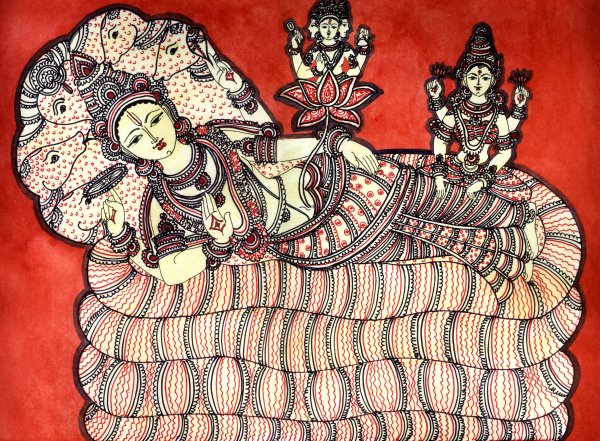
of the world in terms of the blooming of a lotus. The 'Srimad Bhagavatam'
says that before creation, the whole universe was submerged in water. At
that time, Lord Narayana was reposing on his serpent bed Adisesha. The
active element, described in mystical terms, as 'Rajo-guna' manifested
in the form of a lotus that emerged from the navel of Lord Vishnu. On this
lotus was seated Brahma, the creator of the universe. A thought struck
Brahma, "Who am I, seated on the stem of this lotus? How has this lotus
come into being without any basis? It must certainly have one. Let me find
out." Thinking thus, Brahma entered the lotus through the minute pores
of its stem. It was a futile search and Brahma returned to his base, the
lotus, and decided to meditate to find out the answer. It then dawned on
him that the source of his being was shining within himself. Simultaneously,
he also saw Vishnu reclining on Adisesha whose form was like the stem of
a lotus. Incidentally, it is because of the fact that the lotus stalk emanated
from Vishnu's navel that he earned the name of Padmanabha - one who has
a lotus in the navel.
That India's foremost sacred plant
- the lotus - symbolized creation is evident from the following article
"The Subtle Body" by Stella Kramrisch.[2]
An image of great significance is
preserved in the museum at Alampur.The image (approximately AD 600)
is carved in dark stone. The mighty female shape lies facing upward on
a nearly square plane. The rim of this surface frames the figure and allows
the water that is poured over the image during worship, to flow off through
the spout at the proper left of the figure. The whole carved image with
its squarish support fulfills the function of an altar. It lies in the
birth position. The curved arms hold lotus buds. The modeling and contraction
of the toes show the tension and struggle that attend the process of giving
birth. In her shape as woman and in her shape as lotus, one in function
and artistic vision, but dual in shape and in the hierarchy of meaning,
she offers her being to be beheld and worshipped as Goddess.
At Alampur, the image of Aditi is
that of a birth giving mother. If head and face establish the identity
of the person, she who has neither head nor face but a lotus instead is
the lotus, padma, foremost of all plants in India. The image does not hold
full, open lotuses. The buds, which are closed, seem just then only to
have acquired their pointed shape, petals and sepals have not as yet separated.
They are nascent buds in which the embryonic seed pod is hidden. The lotus
buds are not held aloft on either side of the body like the very well known
figure of Sri Lakshmi. Their curve extends the arc of the bent arms of
the image upwards from the knees. Spread within and coerced by the square
limit of the base, the mass rises with curves, which are as tense as they
are elastic. Their arcs hold the tidal waves of the life giving body.
Viewed as a form, the mass of sculpture
appears replete with the vastness of its conception. As earth, womb and
altar, the image of Aditi is surrounded by the waters. The lotus flowers
on them. The lotus, symbol of creativity, blooms above the waters. They
nourish and sustain the plant as the body of the goddess, whose lap holds
the elixir of life, the water of life and the spark of life, the fire,
supports the lotus flower as her head. In these centers of creativity dwell
the meaning and the power of the goddess and her image as altar. The navel
of the earth is borne by the womb of this boundless goddess "who is receptacle
and carrier of all that is born and of all that is to be born." (Rig Veda
1.89.10) This is how Aditi's head is spoken of as earth's place of sacrifice.
The head of Aditi thus is a lotus, for the lotus flower is also above,
in the sky, where the sun is at the head of the universe. The flower overlays
her throat with its petals. There the subtle center (cakra) of the articulate
voice - Vac - is situated. As the mother of Agni, the creative and intellectual
fire, her womb is the self sufficient, self effected and is the perennial
site of regeneration for the great impartite goddess. She is the vessel
of fire within the water of life, and she is laved by primeval waters,
lotus of self renewal in the impartite. "Who will give us back to the Great
Aditi? May I see Mother and Father again?" As altar of the world, Aditi
watches us, raising her sinless lotus head.
Interestingly Buddhist scriptures
also refer to the lotus as a symbol of creation. A Buddhist sutra runs
as follows: "Between the mountains there were many rivers, flowing in all
directions along a hundred different routes, moving slowly downhill, without
waves. The rivers were shallow and their banks weren't steep, making them
easy to ford. The water in them was clean and pure, and flowers floated
on the surface in abundance. The currents were full of them…" According
to this passage, the lotus was the first flower appearing in a world of
water. Buddhist mythology further says that, the first Buddha or Adi Buddha
emerged at the beginning of the world in the form of a flame emanating
from a lotus. Buddhists believe that whenever a Buddha takes birth, a lotus-bud
rises above water and blooms in proportion to his spiritual attainments
or alternatively closes down.
The relationship of the lotus with
the process of creation finds a place in Egyptian mythology too. This is
how their legend unfolds, "In the beginning, the earth was filled with
watery emptiness, without shape. From these waters, called Nun, there emerged
a mound of land. A lotus plant grew from the mound and blossomed and as
its petals opened, the lotus gave birth to the sun." Legend further says
that the Egyptian sun god Ra raised himself from the primordial waters
concealed in a lotus or alternately appeared as a child sitting in a lotus
flower. Egyptians describe this event as the First Occurrence and the earliest
tangible manifestation of divine power. In an interesting parallel to Hindu
mythology, Egyptian traditions hold that "the highest god appeared, self-begotten,
emerging from a lotus." Creation apart, the lotus has been identified with
various gods in different contexts and in several religious traditions.
God's own favourite
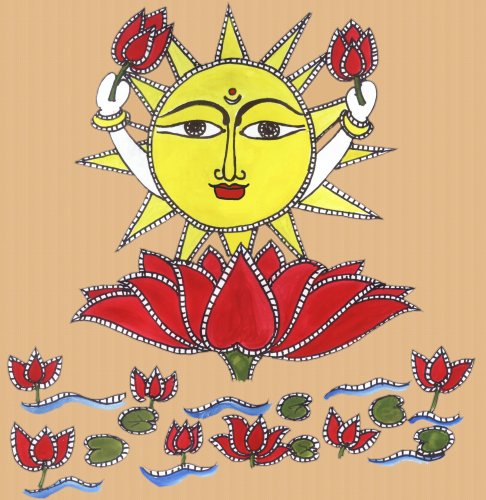
In
the form and personality of gods and goddesses of the world, the lotus
symbol has a special and important place. Invariably the beauty and greatness
of the deities are described with reference to the lotus. Their various
limbs especially hands, feet, face and eyes are likened to it. Many of
these gods also hold in their hands, besides other things, the lotus too.
Still others are depicted as being seated on a lotus. eg. Lakshmi, Sarasvati,
Brahma, Vishnu. Jainism too has a special place for the lotus and the Jain
Tirthankaras are depicted as seated on the flower.
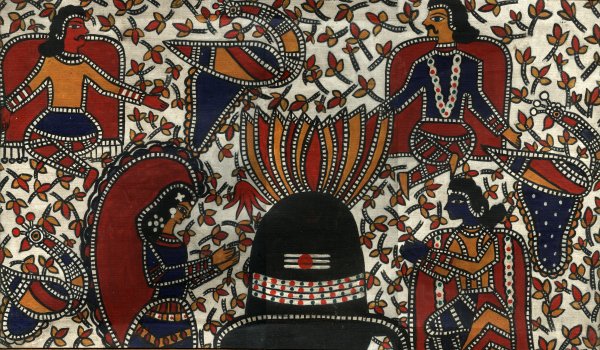
Amongst
the Hindu Trinity, it is the innumerable forms of Lord Vishnu that are
frequently connected with the lotus. Many are the lotus related names of
Vishnu that can be selected out of the thousand names of the Lord eg. Pundarikaksha,
Padmanabha and a host of others. Brahma's birth place was the lotus and
hence he is referred to as Kamalaja, Kamalasana, Kamali, Kamalodhbava and
so on. The lotus has a special affinity with the Sun God or Surya. Sanskritists
fondly describe the sun as a friend of the lotus (Kamalabandhu), controller
of lotus (Kamalanatha), darling of lotus (Kamalavallabha) and with many
other epithets. The flower blooms at sunrise and sets at sunset alluding
to the fact that, all living beings in the world become active with sunrise
and retire for the day at sunset. The sun god is the only male deity holding
lotuses in both hands. He is also seated on a lotus. The connection between
the sun god and the lotus is also extensively dwelt upon in the literatures
of various countries like Egypt, Tibet, China, Japan and so on.
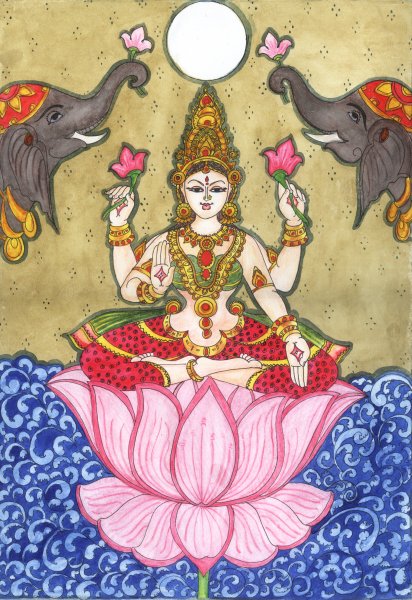
Amongst
the goddesses, Lakshmi has the closest connection with the lotus. She has
lotus in her hands, wears a garland of lotuses and all her limbs are comparable
to a lotus. Dr Ananda Coomaraswamy has divided Lakshmi idols into three
categories - lotus-seated (Padmasthita), lotus-holding (Padmagraha) and
lotus-residing (Padmavasa). According to Vishnu Purana, at the time of
her emergence, Lakshmi was seated on a lotus and also held the flower in
her hand. There are numerous iconographical, sculptural and numismatic
evidences and references that depict Lakshmi and Sarasvati in relationship
with the lotus. In the Sunga period sculptures, she is shown as seated
or standing on a lotus. A miniature image of the Kushana period shows her
holding a lotus and a Sunga coin shows her standing on a lotus with a flower
in her hand. There is carved image of Sarasvati seated on a lotus on the
Bharhut column.
Lotus in Buddhist tradition
Buddhism abounds with interesting
references to the lotus. According to Buddhist beliefs, Buddha had the
sign of a lotus on his feet and at birth, wherever he placed his foot,
lotuses bloomed. Most Buddha images show him seated on a lotus in bloom.
The lotus symbolizes his other worldliness, his great compassion for creatures
of the world, his immortality and enlightenment besides his impeccable
purity of mind and body.
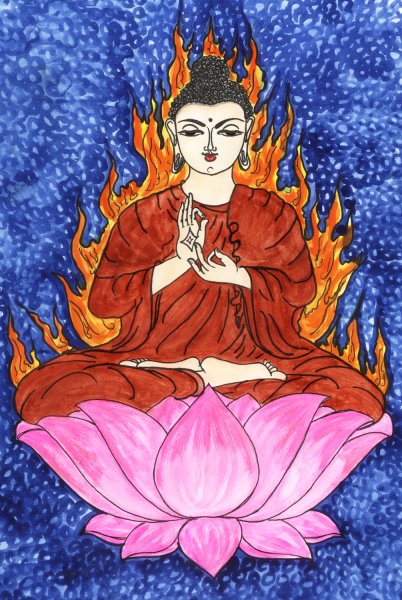
Buddhas
seated on a lotus in bloom or on a lotus-seat have been found in chaityas,
viharas, stupas and caves in many countries. Not only Buddhas but Bodhisattvas
too are lotus seated and holding a lotus. A Bodhisattva is one who has
the capacity and potential and the qualities needed to become a Buddha.
One such example is the Bodhisattva Avalokitesvara. He is the most worshipful
and revered Bodhisattva and very popular in China, Japan, Korea and other
Eastern countries. He holds a lotus with a long stem in his left hand and
is generally seated on a lotus in full bloom. The lotus is also associated
with various other Buddhist gods and goddesses like Tara, Paramita and
Kwan Yin. Besides religion, the lotus plays a significant role in Buddhist
philosophy too.
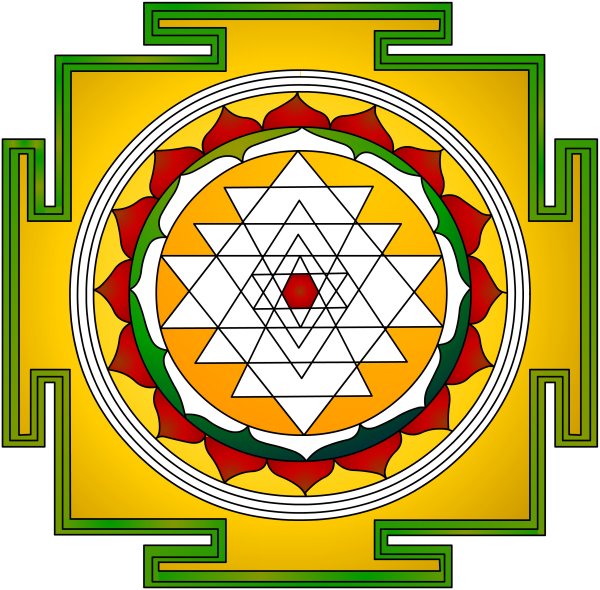
Buddhist
mandalas (yantras) depict different Buddhas and Bodhisattvas inside a lotus
or on its petals. The most revered Buddhist mantra is 'Om Mani Padme Hum'
- "Oh jewel within the lotus, we bow to you." The Buddhist Mahayana treatise
is titled Sadharma Pundarika Sutra meaning, "the lotus, a key to the religion
of truth. It is otherwise called Lotus Sutra. According to another sutra,
the image of Universal knowledge rests on a white lotus which, is also
the heart symbolizing self-bliss and ultimate bliss. A chant goes that
when the white lotus descends on earth it changes everyone's life for the
better. Buddhist ages, with reference to the cosmos, are also initiated
by the appearance of a lotus. Again, it is this flower that augurs the
birth of a Buddha. If there are no blossoms, no Buddha will appear. At
the beginning of the current era, the Bhadrakalpa, there were 1000 blossoms
signifying the birth of 1000 Buddhas. Four virtues are attributed to this
flower - scent, purity, softness and loveliness. While these qualities
can be seen in other flowers too, Chinese botanists at one time believed
that the lotus flowered and bore fruit at the same time, thus symbolizing
the ability to transcend the limitations of time. It was this belief that
elevated it to a privileged status amongst flowers. Not only in this life
but also in the after life, the lotus has a special place in Buddhist tradition.
Lotus and after-life
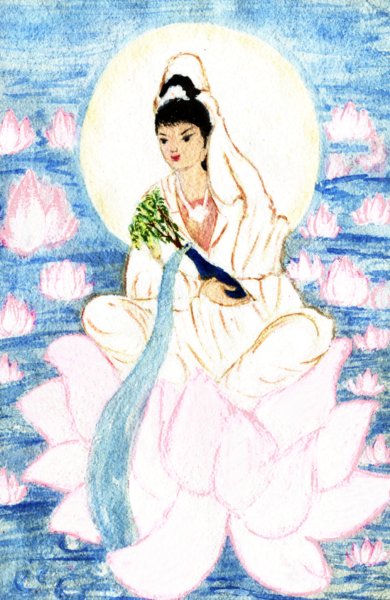
The
Lotus sect of Chinese Buddhism believes that people are freed from the
cycle of birth and death by going to a celestial sphere called the Western
heaven. This paradise contains seven treasure ponds. The bed of these is
covered with gold dust and the lotuses there are as big as carriage wheels.
Buddhist temple courtyards often
depict the Sacred Lake of Lotuses. The significance of this can be gauged
from the following related story: "Each soul has a lotus on this lake,
which will open to receive them after death and where they will wait until
the time of its opening. The flowers thrive or droop according to the piety
of the individual on earth. For the devout, they open immediately when
he dies, admitting the soul at once to the divine presence." In China,
the envelopes given to the family at a funeral are impressed with the outline
of a lotus.
Religion and philosophy apart, the
lotus reigns supreme in the day to day lives of the Buddhists of China.
Pictures showing fat dancing babies holding lotus leaves or flowers are
purchased in the hope that people will give birth to several boys in succession.
Since lotus leaves protect the goldfish under them, the lotus also symbolizes
continuous abundance. In Buddhist arithmetic, Padma denotes the highest
figure. It is one followed by 19 ciphers. Incidentally, in Indian arithmetic,
it is one followed by 15 ciphers. Knowing this background, one is not surprised
when one spots the profusion of lotus motifs at Amaravati and other Buddhist
sites!
Lotus in Jain tradition
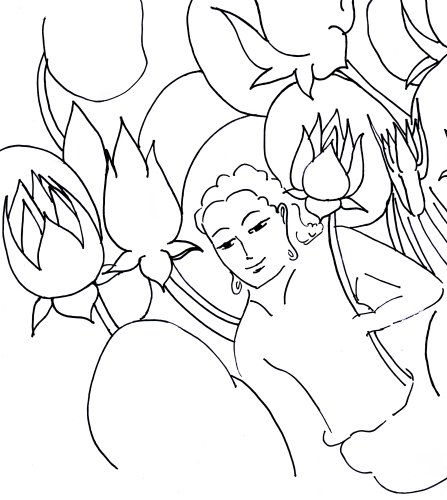
Sittannavasal
The Jain Tirthankaras, Yaksas, Yaksinis,
Yoginis, Vidyadevis are associated with the lotus in some form or the other.
Jain beliefs give special importance to special dreams, which they term
as Mangala Swapna. According to Jain texts, whenever a future Tirthankara
is to take birth, the mother has an auspicious dream. The Kalpa Sutra extensively
describes 14 dreams that Tirthankara Mahavira's mother saw. Out of them,
four were connected with the lotus. They are - a pitcher filled with water
and lotuses; a big lake full of lotuses and water creatures; a garland
of different flowers and a vision of the four-armed goddess Sri. The latter
was seen holding a lotus in her hand and surrounded by elephants performing
abhisheka (ritual of pouring sacred water) to her. Jains consider a full-blown
lotus as an auspicious symbol. As far as art and architecture are concerned,
the lotus is extensively sculpted on stone. One such is a famous white
marble statue of Jain Sarasvati from Pali that shows her standing on a
lotus.
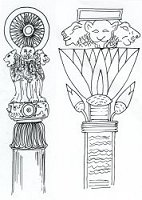
Columns with lotus motif
It was not only in Hinduism, Buddhism
or Jainism but also in other Indian religions like Sikhism and later on
even in Islam and Christianity that the lotus came to occupy a significant
place. The Sikh gurus glorified the lotus as an embodiment of strength,
chastity and power along with the ability to remain detached from swirls
of impurities. The flower was therefore used as a motif at the dome of
the Golden Temple - the holiest of the Sikh shrines at Amritsar. Many churches
of Kerala sport the lotus motif. In Goa, four evangelists, on either side
of Jesus, stand on full- blown lotuses on the pulpit in Bom Jesus Church.
In Islamic architecture too, the lotus firmly claimed its place, as can
be seen from the fact that the padmakosha or sheath of lotus petals is
the most popular form in Mughal architecture. The famous Charminar of Hyderabad
has numerous representations of the lotus. The Islamic monuments at Bijapur
also show the same feature. But let us step across the borders of our country
and enter into Egypt and hear the tales they have to tell with regard to
this flower.
The Blue Lotus of Egypt
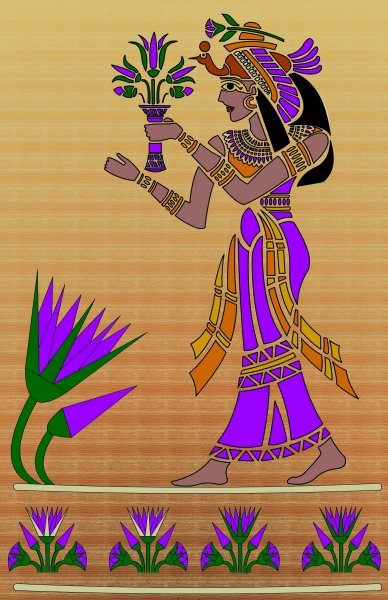
Just
as in India, in Egypt too the lotus is vested with several philosophical
and esoteric meanings but with a significant difference. It is the blue
lotus that has been famous here since days of yore. To the Ancient Egyptians,
the blue lotus was the most perfect type of flower. The blue lotus (Nymphaea
Cerulea) belongs to the Water-Lily family. However, it is distinctly different
from the blue lily. The blue lotus is also known as Egyptian lotus, blue
water lily and sacred lily of the Nile. Fossils of this plant, that belong
to the Jurassic period i.e. about 160 million years ago have been discovered.
Further evidences show the prolific growth of this plant before the Ice
Age.
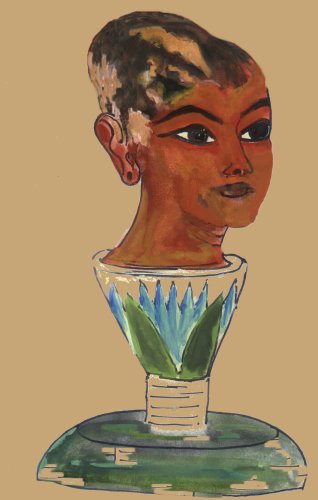
Ra
The blue lotus is a floating aquatic
plant with colourful and aromatic flowers. The leaves are waxy, leathery
and dark green with a reddish-purple colour underneath. The genus includes
both night bloomers and day bloomers. A rather bizarre characteristic of
certain species of this plant is that they fold their petals and sink beneath
the water's surface during the night and resurface the next day to bloom
again. The plant has an uncanny ability to survive even after long droughts
and even its seeds remain viable for many years. It is due to these characteristics
that ancient cultures like Asia consider the lotus as a symbol of immortality.

Nile delta
The blue lotus is associated with
various gods. Ra, the creator-god is believed to have first appeared as
a beautiful child floating on a great blue lotus. The blue lotus thus symbolized
the origin of life. Interestingly, the ancient Egyptians believed that
the Nile valley area was the birthplace of human civilization and there
is a remarkable similarity between the shape of the flower and the Nile
and its tributaries.
Horus, the sun god is often depicted
sitting on a lotus in the manner of Brahma. The lotus is also the flower
of resurrection, used in funeral rites. The Book of the Dead contains spells
for transforming oneself into a lotus and thus fulfilling the promise of
resurrection. The lotus is depicted on tombs as can be seen from the spread
of the flower on the tomb of Tutankhamen. Till date, the Egyptians design
their chalices and wine glasses as the lotus. There are also drawings of
people smelling the lotus flower. It was believed that its smell induced
a state of utopia. In short, the blue Egyptian lotus was all pervasive
in Egyptian art and culture. Recently scientists at the University of Manchester,
England, delved into the properties of the blue lotus and came up with
some startling facts.
Amazing medicinal properties of
the Lotus
The blue lotus contains nuciferine,
a hypnotic compound that relaxes muscle tissues. It is also considered
effective in treating migraines, Alzheimer's, heart conditions, sexual
disorders and so on. The ancient Egyptians have made tonics from the blue
lotus as a cure for liver malfunctions.
In India, the medicinal properties
of the lotus and its many parts have been extensively described in all
ancient texts like the works of Charaka, Sushruta and others. Bhavaprakasa,
a text says, "The lotus is cool and enhances complexion. It has a sweet
juice, it is anti-phlegmatic, anti-bilious and it relieves dryness of throat,
burning sensation, blood impurity, poisonous sores and itching. The white
lotus is cool, sweet and anti-phlegmatic." Thus there are many ayurvedic
drugs that are prepared from this flower. The lotus' medicinal properties
are indisputable and its worth gets enhanced by the fact that it is a delectable
food item too.
Lotus eaters
The lotus root can be used in the
preparation of a number of dishes. The raw root can be roasted, cooked
as a vegetable, fried as pakodas, pickled or even made into gruel. The
roots are rich in protein, carbohydrates and potash. Lotus seeds can be
dried, powdered and eaten. The seeds of the blue lotus can be powdered
into flour and used for making bread.
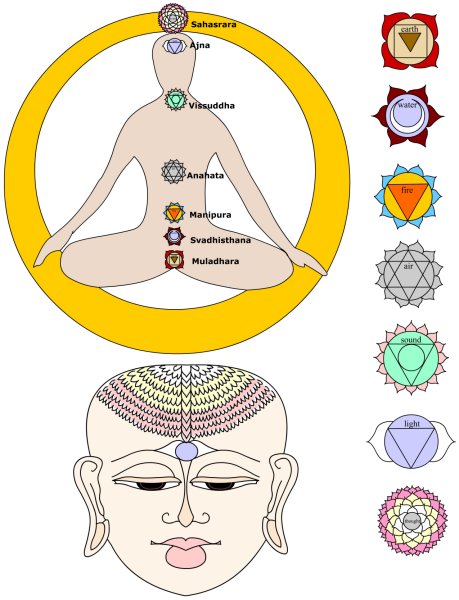
Lotus
with reference to yoga and ayurveda
Talking about health, according
to yoga, ayurveda and other ancient Indian lore that deal with the body,
there are seven chakras or nerve centers in the human body. Each of them
is symbolized by the lotus. Thus:
| Chakra |
Symbol |
| Muladhara or root chakra |
Lotus with four red petals |
| Svadishtana or sacral chakra |
Lotus with six vermillon petals |
| Manipura or solar plexus |
Lotus with ten blue petals |
| Anahata or heart chakra |
Lotus with twelve petals |
| Vishuddha or throat chakra |
Lotus with sixteen petals |
| Ajna or third eye |
Lotus with two white petals |
| Sahasrara or crown |
Lotus with 1000 petals representing
the infinite |

Amongst
the wide range of yoga poses, it is Padmasana or the lotus pose that is
best known. In this, the legs are crossed in such a way that the feet are
placed on the thighs, the hands rest on the knees and one sits with a straight
spine. The benefits of the lotus pose have been documented as follows:
It enables one to remain motionless
for extended lengths of time
Prevents restlessness and muscular
tensions
Provides an optimal condition for
the free flow of cerebrospinal fluid that nurtures the nerve endings and
the brain
The Gheranda Samhita, a classical
yoga text describes the lotus pose as the destroyer of all diseases.
Talking about texts, the vast ocean
of Indian literature is replete with references to this unique flower.
The oldest literary work of the world, the Vedas, abound with references
to the lotus. Kalidasa, the master poet, makes full use of the flower to
stress on the beauty of rivers, lakes, women et al. Lest one think that
this flower is a literary device employed only by Sanskritists, Nobel Laureate
Rabindranath Tagore's statement quickly dispels any such notion. The great
poet wrote, "Indian culture is like a blooming lotus of a hundred petals,
each of its petals representing a regional language and its literature."
The hoary tradition of the lotus
coupled with its significance earned for it the enviable status of the
national flower of India. In fact, post-independence, many of the coveted
government awards have also been named after the flower - the Padmashri,
Padmabhushan and so on. The allure of the lotus has not only spanned religions
and continents but also the ages, for as recent as in 1903 when the first
Bahai House of Worship was built in Turkestan, the architects concurred
upon the use of the lotus as its principal motif. The whole configuration
is suggestive of a great marble flower emerging upwards from a nourishing
pool of water to reach towards the light. The reasons for their choice
were drawn from the pan-continental traditions associated with it.
Indeed, the sun will never set on
the lotus!
1, 2 - Excerpts from "EXPLORING INDIA'S
SACRED ART", selected writings of Stella Kramrisch, published by University
of Pennsylvania Press, 1983
Lakshmi Devnath is a freelance
journalist with more than 100 articles to her credit on Carnatic music
and religion, published in The Hindu as also in various journals like Sruti
and Nrisimhapriya.
Credits
Research and concept: Anita Ratinam
"Boundless Beauty" article: Lakshmi
Devnath
Original art work/Illustrations:
Sumathi
Published by Anita Ratinam
Copyright: Arangham Trust, Chennai
Please note that the copyright of
the article "Boundless Beauty" rests with the author.
Arangham Trust
e-mail: arangham@gmail.com
arangham.com
|